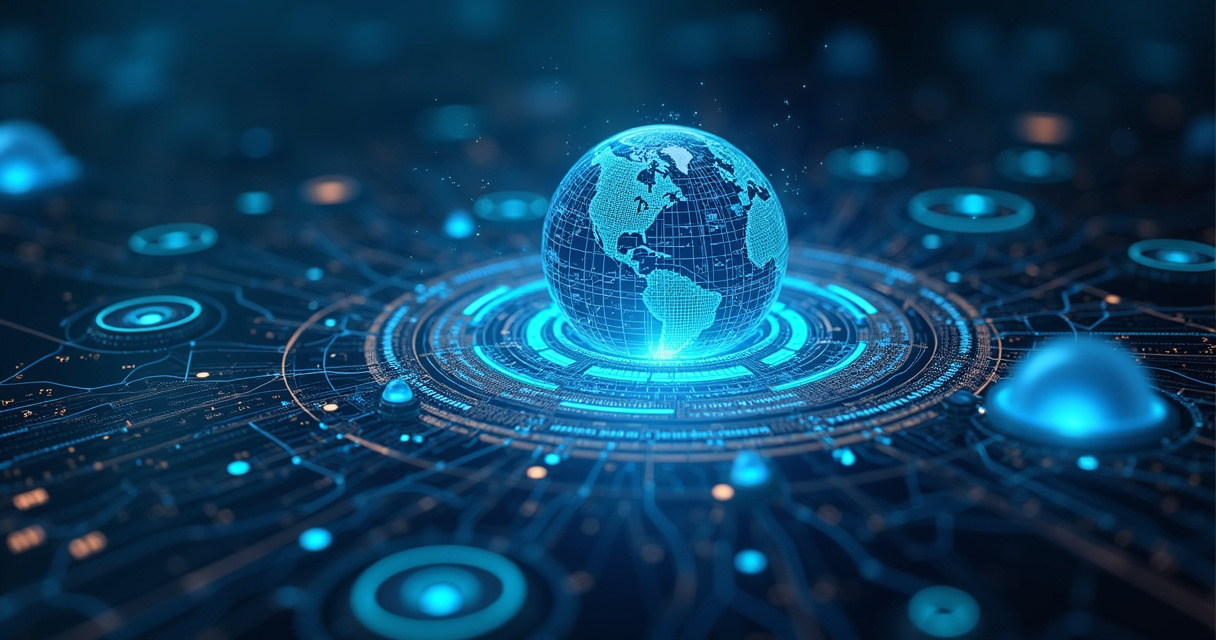
The rapid pace of digital innovation often feels overwhelming, yet understanding the foundational shifts in our modern infrastructure is essential for professional and personal growth. A beginner guide to emerging technology concepts serves as a roadmap for those looking to decode the complex systems driving the 21st century. These technologies are not merely distant possibilities; they are active components of current industries, from healthcare and finance to manufacturing and logistics. By breaking down these sophisticated tools into manageable components, individuals can better anticipate how new developments will influence daily operations, data security, and long-term economic trends.
Artificial Intelligence and Machine Learning Fundamentals
Artificial Intelligence (AI) refers to the simulation of human intelligence processes by computer systems. At its core, AI encompasses learning, reasoning, and self-correction. Machine Learning (ML), a critical subset of AI, focuses on the development of algorithms that allow computers to learn from data patterns without being explicitly programmed for every specific task.
When a system analyzes historical data to predict future outcomes, it is utilizing predictive analytics, a primary application of ML. For instance, recommendation engines on streaming platforms or predictive text on smartphones rely on these models to improve user experience over time. As these systems consume more data, their accuracy typically increases, demonstrating the self-optimizing nature of modern computational intelligence.
The Decentralized Landscape of Blockchain Technology
Blockchain technology functions as a distributed, immutable ledger that records transactions across a network of computers. Unlike traditional databases managed by a central authority, blockchain provides transparency and security by requiring consensus among network participants before data is finalized. Each “block” contains a cryptographic hash of the previous block, a timestamp, and transaction data, which makes unauthorized alteration of records mathematically improbable.
Beyond its association with digital currencies, blockchain offers immense potential for supply chain management and identity verification. By providing a permanent, verifiable record of origin for products, companies can ensure authenticity and reduce fraud. This technology effectively shifts the burden of trust from an intermediary entity to a secure, algorithmic protocol, changing how contracts and agreements are executed globally.
Internet of Things and Hyper-Connectivity
The Internet of Things (IoT) describes a network of physical objects—or “things”—embedded with sensors, software, and other technologies to exchange data with other devices and systems over the internet. These devices range from household appliances like smart thermostats to sophisticated industrial equipment that monitors temperature, pressure, and mechanical integrity in real-time.
The primary value of IoT lies in its ability to generate massive amounts of actionable data. In a smart city framework, IoT sensors might monitor traffic flow to optimize signal timing, thereby reducing congestion and carbon emissions. This hyper-connectivity facilitates a more responsive environment where systems can react to real-world conditions instantaneously, leading to enhanced efficiency and resource conservation.
Comparative Analysis of Emerging Technologies
| Technology | Primary Function | Key Advantage | Typical Industry Application |
|---|---|---|---|
| Artificial Intelligence | Pattern recognition | Speed and predictive accuracy | Finance and Healthcare |
| Blockchain | Distributed record-keeping | Security and transparency | Banking and Supply Chain |
| Internet of Things | Data collection/sensing | Real-time monitoring | Manufacturing and Smart Cities |
| Edge Computing | Localized data processing | Reduced latency | Autonomous vehicles |
Edge Computing and Real-Time Data Processing
Edge computing represents a shift in how data is processed, moving the computation closer to the source of the data rather than relying on a centralized cloud server. In traditional models, data travels to a data center, is processed, and then sent back, which introduces latency. Edge computing mitigates this delay by performing the heavy lifting locally at the “edge” of the network.
This capability is particularly vital for technologies that require instantaneous reaction times, such as autonomous vehicles or remote robotic surgery. By minimizing the distance data must travel, edge computing ensures that critical decisions are made in milliseconds. This decentralization of processing power is a cornerstone for the next generation of high-speed connectivity and automated systems.
Addressing Common Questions Regarding Emerging Tech
How do these technologies interact with one another?
These concepts often function as an ecosystem. For example, an IoT device collects data, which is then processed at the edge to reduce latency, and finally analyzed by AI models to derive insights. Blockchain may be used to secure the data exchanged between these devices.
Is technical expertise required to understand these concepts?
Basic conceptual understanding does not require programming knowledge. Focusing on the functional value and the problems these technologies solve provides a strong foundation for non-technical professionals.
What are the primary risks associated with new technology adoption?
Common concerns include data privacy, cybersecurity vulnerabilities, and the ethical implications of automated decision-making. Continuous learning and adherence to established security protocols are essential for risk mitigation.
How can one keep up with rapid technological changes?
Following reputable industry research reports, attending technology webinars, and monitoring institutional white papers are effective ways to stay informed. Focusing on core principles rather than fleeting trends helps maintain long-term relevance.
Conclusion and Future Perspectives
The journey toward understanding emerging technology concepts is a continuous process of adaptation and discovery. By grounding oneself in the fundamentals of AI, blockchain, IoT, and edge computing, one gains the ability to navigate a world increasingly defined by digital transformation. These technologies represent a departure from static, manual systems toward dynamic, intelligent, and interconnected frameworks. As these tools continue to mature, their integration into everyday life will likely become more seamless, hidden beneath the surface of user-friendly interfaces.
For those beginning this exploration, the most effective approach is to focus on the problem-solving capacity of each technology. Whether it is the efficiency gains of machine learning or the security benefits of a decentralized ledger, identifying the practical utility of these concepts clarifies their role in the broader technological landscape. Future advancements will undoubtedly introduce new complexities, but a solid grasp of these core pillars will provide the necessary context to evaluate and embrace change effectively. Staying curious and analytical remains the most reliable strategy for remaining relevant in an era of unprecedented innovation.
Featured Image Credit: Generated/Sourced via Runware.ai.
Disclaimer: This article is AI-generated for informational and educational purposes. While we strive to provide high-quality context and authority, the content should not be used as professional advice. The author/website assumes no liability for external links or factual omissions.
Important Links for n8nu.online
© 2026 n8nu.online. All Rights Reserved.